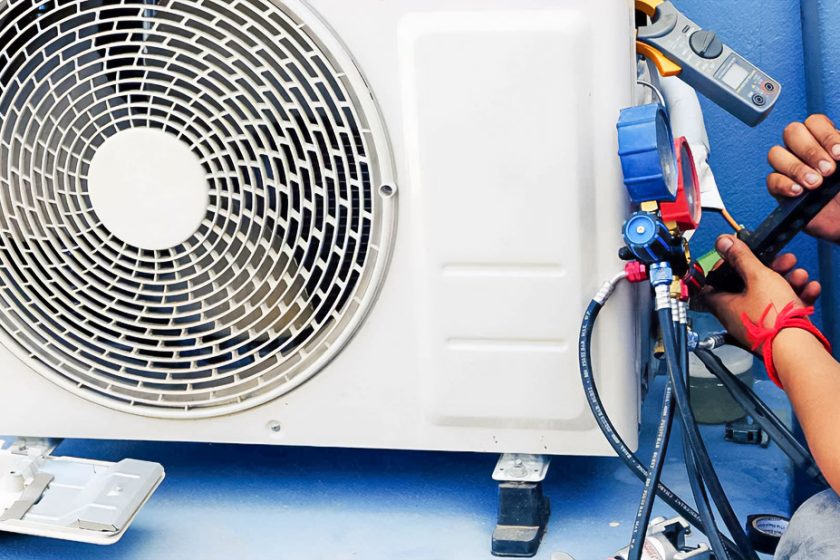
When the house gets hot in summer or cold in winter, most people first think about the power of the cooling or heating system. This is often the moment when homeowners start looking into ac repair Dubai services, assuming the issue lies in the equipment itself. However, in practice, the effectiveness of any climate system is largely determined not by technology, but by how the space itself is arranged. The layout of the house, the size of the rooms, the height of the ceilings, the location of the windows and the kitchen as a source of heat directly affect the air circulation, temperature distribution and overall comfort.
Page Content
Why is Layout More Important Than it Seems?

A cooling or heating system does not “create comfort by itself”. It only supplies treated air, which must then spread throughout the room, displace warm air, overcome obstacles and compensate for heat loss. If the layout prevents this, there is an uneven temperature distribution, local areas of overheating or hypothermia, and increased energy consumption – even when regular ac maintenance is performed.
The layout either helps the airflow or works against it. That is why it is cool and uniform in one house, while in another, at the same temperature, some areas remain stuffy, while others are too cold.
The Size and Shape of the Rooms
The size of the room is directly related to the heat load. Large rooms require more time and energy for cooling and heating than compact spaces. Irregular rooms are especially difficult – elongated, L-shaped, with niches and corners. In such areas, the airflow often loses speed and the air stagnates.
- The temperature is distributed unevenly.
- Warm and cold areas appear.
- The feeling of comfort does not match the readings of the thermostat.
This is not a malfunction of the system but a consequence of the geometry of space.
Open floor plan: Freedom of Air and Temperature Issues
The open floor plan, where the kitchen, dining room and living room are combined into one space, has become the standard for modern homes. It really facilitates air circulation but at the same time complicates temperature control.
There are several reasons:
- Increased air volume
- No partitions holding the cooled or heated air
- Fast heat transfer between zones
The kitchen plays a special role here. During cooking, it becomes an active source of heat and moisture. This heat spreads freely throughout the open space, increasing the overall heat load. As a result, the cooling system is forced to compensate not only for external heat intakes but also for internal ones.
Ceiling Height and Thermal Stratification
High ceilings visually make the house spacious, but from the point of view of air physics, they create additional difficulties. Warm air rises up, and thermal stratification occurs in rooms with a large vertical volume.
It means:
- The temperature under the ceiling is higher.
- It may remain cool in the area where people are located or on the contrary, it may be uncomfortable.
- The system spends energy on heating or cooling the air, which is practically not involved in the formation of comfort.
- Even if the average room temperature rises, the subjective feeling may not improve.
Windows, Sun and Orientation of the House
Windows are one of the main sources of heat flows. Their orientation directly affects the load:
- The morning sun heats up some rooms.
- Daytime and evening – other.
- Large glazing areas enhance the effect.
At the same time, the solar heat is not evenly distributed. The areas next to the windows warm up faster, and the cooling system reacts locally, which again leads to temperature fluctuations within the same space.
Partitions, Doors, and Air Pressure
In houses with a closed layout, partitions and doors help to keep the treated air inside the rooms. This simplifies spot temperature control but creates another problem – air imbalance.
When the doors are closed, the air stops returning freely, there are zones of high and low pressure, and circulation slows down. As a result, some rooms are cooled or heated better, and some are worse, despite the same settings.
Ventilation and Placement of Air Distribution Elements
Even with the correct system capacity, the incorrect placement of the ventilation openings can minimise efficiency. The airflow is easily blocked by furniture, curtains, or an incorrect flow direction.
Typical consequences:
- The air does not reach the far zones
- The warm air is not effectively removed
- It creates a feeling of weak system operation
Large and open spaces are especially sensitive to this.
The role of thermal insulation and materials
The structural elements of a house determine how long it maintains a comfortable temperature. Insufficient thermal insulation leads to:
- The heat goes away quickly in winter.
- In summer, excess heat penetrates inside.
- The system works longer and more intensively.
Materials with high thermal inertia are able to accumulate heat and release it later, which affects the night temperature and the overall thermal behaviour of the building.
Multi-level houses and temperature differences
In houses with multiple levels, the problem increases. Due to the natural rise of warm air, the upper floors are almost always warmer than the lower ones. It is extremely difficult to achieve uniform comfort without careful air flow distribution and zoning.
Comfort is not just about temperature
It is important to understand that comfort is not determined by one number. Perception is influenced by:
- The speed of air movement
- Humidity
- Noise level
- Uniformity of temperature
For example, a low fan speed makes the system quieter but reduces the range of air distribution. In large rooms, this can worsen the distribution of heat or cold, even if the temperature is set correctly.
The layout of a house is the foundation on which the efficiency of cooling and heating is built. Open spaces, high ceilings, kitchen as a source of heat, orientation of windows, partitions, ventilation and thermal insulation form a single thermal circuit.
Understanding exactly how the air moves inside a space allows not only to increase comfort but also to reduce energy consumption. Even without replacing the equipment, proper work with the layout and airflow can noticeably change the feeling of the house — to make it stable in temperature, predictable and really comfortable.